How to Improve Healthcare Claim Accuracy and Get Paid Faster
Accurate medical claims are essential for a healthy healthcare revenue cycle. Even a small mistake in patient information, coding, insurance details, or documentation can cause a claim to be delayed or denied. When these issues happen repeatedly, healthcare practices may experience slower payments, increased administrative work, and lost revenue.
Improving healthcare claim accuracy can help practices submit cleaner claims, reduce avoidable denials, and receive reimbursements faster. With the right processes and technology, providers can create a more efficient billing workflow while allowing staff to focus more on patients.
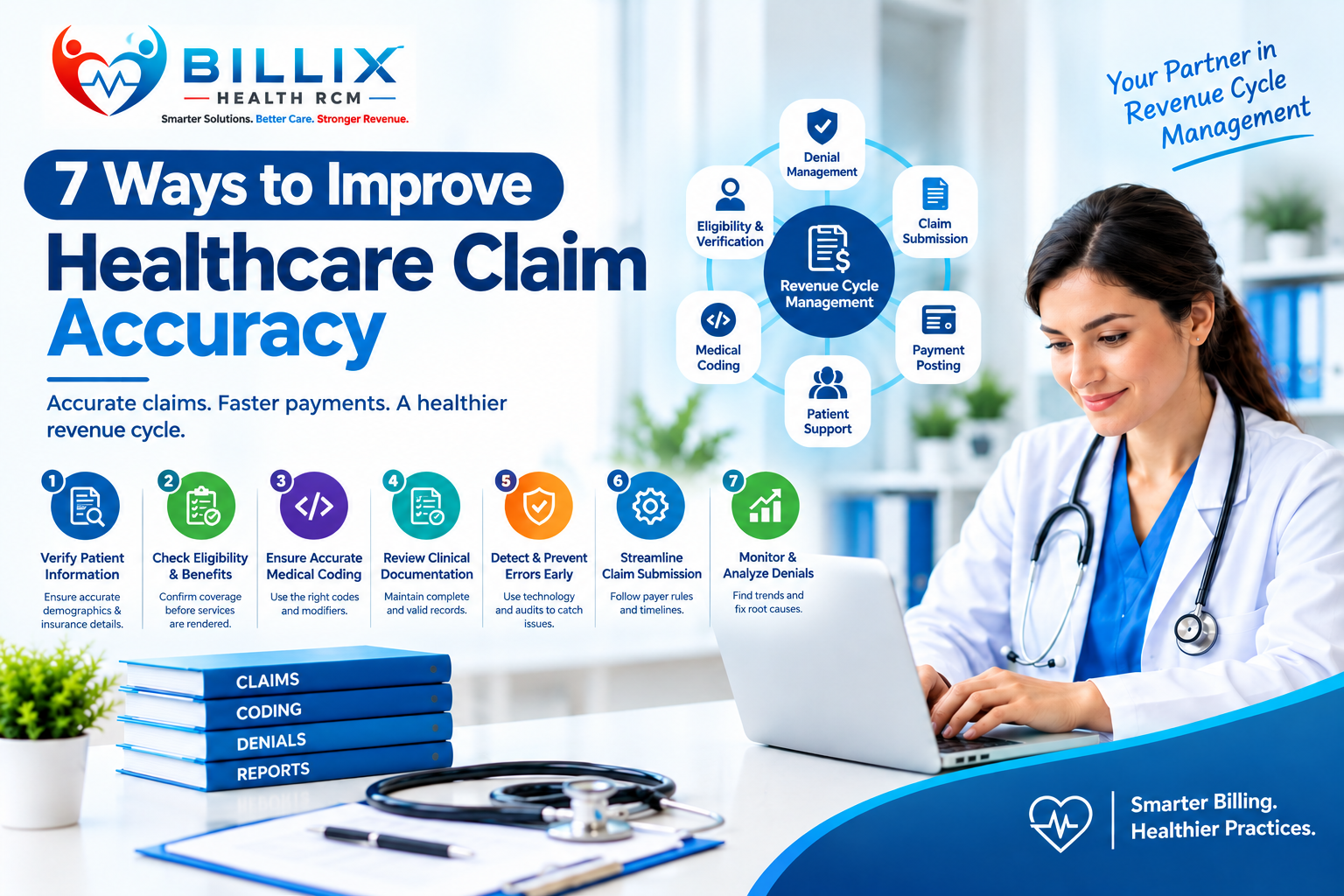
Here are seven practical ways to improve claim accuracy and strengthen your revenue cycle.
Verify Patient Information Before Billing
Incorrect patient information is one of the simplest problems to prevent. Names, dates of birth, insurance IDs, addresses, and other demographic details should be reviewed carefully before claims are submitted.
Insurance eligibility should also be checked before appointments whenever possible. Confirming coverage and benefits helps identify inactive policies, incorrect insurance information, and potential coverage issues early.
Accurate information at the beginning of the billing process can prevent unnecessary claim delays later.
Strengthen Medical Coding Accuracy
Medical coding directly affects how healthcare services are represented on a claim. Incorrect ICD-10, CPT, or HCPCS codes can lead to rejected or denied claims.
Coding teams should review documentation carefully and make sure the codes accurately represent the services provided. Regular coding audits can also identify recurring errors and provide opportunities for staff training.
Better coding accuracy supports cleaner claims and helps practices avoid preventable revenue loss.
Use Automated Claim Scrubbing
Claim scrubbing technology can identify common errors before claims reach insurance companies. Automated checks can review information such as missing fields, coding inconsistencies, invalid payer details, and other potential problems.
Instead of discovering mistakes after a claim is rejected, practices can address issues before submission.
This proactive approach can improve first-pass claim acceptance and reduce unnecessary rework for billing teams.
Keep Insurance Information Updated
Patients may change insurance plans, employers, or coverage levels throughout the year. Using outdated insurance information can result in rejected claims and delayed payments.
Healthcare organizations should make insurance verification a regular part of their revenue cycle workflow.
When payer information is accurate and current, claims have a better chance of reaching the correct insurance company the first time.
Improve Documentation and Charge Capture
Complete clinical documentation supports accurate coding and billing. Missing or unclear documentation can create questions about whether a service was properly reported.
Healthcare practices should establish consistent processes for capturing charges and connecting them with appropriate documentation.
A strong charge capture process helps ensure that services are billed correctly and that providers are not leaving legitimate revenue uncollected.
Monitor Claim Denials and Identify Patterns
Denial management should not only focus on fixing individual rejected claims. Practices should also analyze why denials are happening.
For example, if many claims are denied because of eligibility issues, the practice may need to improve its verification process. If coding-related denials are increasing, additional coding audits or training may be necessary.
Tracking denial trends allows healthcare organizations to address the underlying problems instead of repeatedly correcting the same mistakes.
Partner With an Experienced Medical Billing Team
Managing every part of the revenue cycle internally can become challenging as a practice grows. An experienced medical billing partner can provide support with eligibility verification, coding, claim submission, denial management, payment posting, and accounts receivable follow-up.
Outsourcing selected billing functions can also give providers access to specialized knowledge and technology without increasing their internal workload.
For practices looking to improve healthcare claim accuracy, professional revenue cycle support can be an effective way to create a more consistent billing process.
Why Healthcare Claim Accuracy Matters
Accurate claims can have a direct impact on a practice’s financial performance. Fewer errors mean less rework, fewer avoidable denials, and potentially faster reimbursement.
A strong claims process can also improve staff productivity. Instead of spending hours correcting preventable mistakes, billing teams can focus on more valuable revenue cycle activities such as denial follow-up and accounts receivable management.
Most importantly, claim accuracy should be treated as an ongoing process rather than a one-time project. Regular monitoring, staff education, technology, and workflow improvements can help practices maintain better billing performance over time.
Conclusion
Improving healthcare claim accuracy requires attention to every stage of the revenue cycle. From verifying patient insurance and improving coding to using claim-scrubbing technology and analyzing denial trends, small improvements can create meaningful financial benefits.
Healthcare practices that prioritize accurate claims can reduce avoidable billing problems, improve reimbursement efficiency, and build a stronger revenue cycle.
With the right processes and experienced support from Billix Health RCM, healthcare organizations can work toward cleaner claims, fewer denials, and more predictable revenue.
FAQs
What is healthcare claim accuracy?
Healthcare claim accuracy refers to submitting claims with correct patient information, insurance details, medical codes, documentation, charges, and billing information.
How does claim accuracy reduce denials?
Accurate claims contain fewer errors and missing details, reducing common causes of rejections and denials before the claim reaches the payer.
Can medical billing services improve claim accuracy?
Yes. Professional medical billing teams can support eligibility verification, coding, claim review, submission, denial management, and other processes that contribute to more accurate claims.


