The healthcare industry is generating more operational and financial data than ever before. Every patient visit, insurance claim, payment, denial, and reimbursement creates valuable information that can reveal patterns capable of improving financial performance. Yet many healthcare organizations still rely on historical reports instead of using their data to make proactive decisions.
This is where Predictive Analytics in Medical Billing is changing the game.
Rather than waiting for claims to be denied or payments to be delayed, predictive analytics enables healthcare providers to identify potential issues before they become costly problems. By turning raw billing data into meaningful insights, practices can improve operational efficiency, reduce revenue leakage, and strengthen their overall financial health.
Moving from Reactive to Proactive Revenue Cycle Management
Traditional billing workflows often focus on fixing problems after they occur. A denied claim is corrected, an appeal is submitted, and payment is eventually recovered. While this process works, it consumes valuable time and administrative resources.
Predictive analytics introduces a different approach. Advanced algorithms evaluate historical billing patterns, payer behavior, coding trends, and reimbursement history to identify claims that are more likely to experience delays or denials. Instead of reacting to financial setbacks, billing teams can intervene before claims are submitted.
This proactive workflow allows healthcare organizations to maintain healthier cash flow while reducing unnecessary administrative work.
Identifying High-Risk Claims Before Submission
Every denied claim represents lost productivity and delayed revenue. Even a small percentage of preventable denials can significantly impact a medical practice’s financial performance.
Modern analytics platforms evaluate multiple variables, including:
- Patient eligibility history
- Insurance-specific payment behavior
- Coding accuracy trends
- Documentation completeness
- Provider billing patterns
- Previous denial reasons
When these factors indicate elevated risk, billing teams receive alerts before claims are submitted. Correcting potential issues early dramatically improves first-pass acceptance rates and shortens reimbursement cycles.
Smarter Decision Making Through Data
Healthcare leaders no longer need to rely on assumptions when making financial decisions.
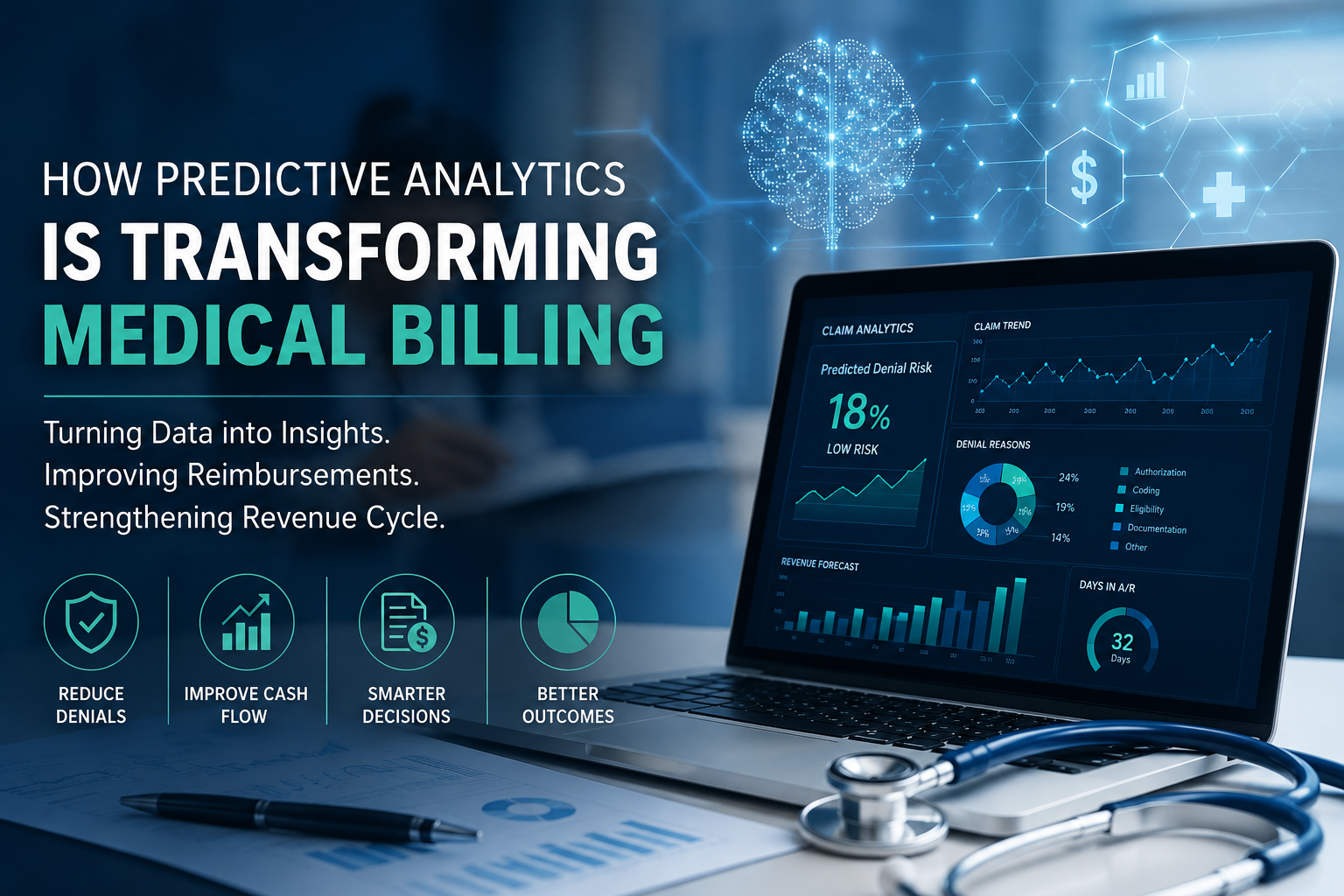
Comprehensive reporting dashboards provide visibility into:
- Collection performance
- Payer turnaround times
- Accounts receivable aging
- Department-level productivity
- Revenue leakage patterns
- Seasonal reimbursement trends
These insights help practice managers allocate resources more effectively, optimize staffing, and focus improvement efforts where they generate the highest return.
Instead of asking, “What happened last month?” organizations begin asking, “What is likely to happen next?” That shift creates measurable financial advantages.
Improving Payer Relationship Management
Insurance companies often demonstrate consistent reimbursement behaviors. Some payers process claims quickly, while others require additional documentation or have higher denial rates for specific procedures.
Using Predictive Analytics in Medical Billing, providers can recognize these recurring patterns and adjust their billing strategies accordingly.
For example, if analytics identifies that a specific payer frequently requests additional clinical documentation for certain services, staff can include that information before claim submission. This reduces unnecessary delays and improves reimbursement timelines.
Over time, this intelligence helps practices develop more efficient payer specific workflows.
Supporting Compliance Without Slowing Operations
Healthcare regulations continue evolving, making compliance an ongoing challenge for billing departments.
Predictive systems can identify unusual coding behaviors, documentation inconsistencies, and billing anomalies that may increase audit risk. Rather than replacing compliance professionals, analytics serves as an additional layer of protection by highlighting exceptions that deserve closer review.
This strengthens documentation quality while helping organizations maintain consistent billing standards.
Enhancing the Patient Financial Experience
Patients increasingly expect transparent financial communication before receiving care.
Predictive tools can estimate insurance responsibility, identify payment risks, and forecast out-of-pocket expenses with greater accuracy. This allows front-office teams to have informed financial conversations before treatment begins.
Clear financial expectations improve patient satisfaction while reducing unpaid balances and collection efforts after services have been delivered.
For providers, stronger patient communication often translates into healthier revenue performance.
Building a Future Ready Revenue Cycle
Healthcare organizations that embrace intelligent technologies position themselves for long-term growth. Data-driven billing operations improve efficiency without sacrificing quality or compliance.
The goal is not simply faster claim submission. It is creating an adaptive revenue cycle capable of learning from every transaction and continuously improving future performance.
Organizations that invest in modern analytics gain greater visibility into operational performance, stronger financial forecasting capabilities, and more informed strategic planning.
As reimbursement models become increasingly complex, the ability to anticipate challenges rather than simply respond to them will become one of healthcare’s greatest competitive advantages.
Why the Right Revenue Cycle Partner Matters
Technology alone cannot maximize financial outcomes without experienced professionals who understand billing regulations, payer requirements, and evolving reimbursement strategies.
At Billix Health RCM, our specialists combine industry expertise with data-driven processes to help healthcare providers reduce claim denials, accelerate reimbursements, and improve operational performance. By leveraging advanced reporting, intelligent workflow management, and continuous revenue analysis, we help practices build stronger financial foundations while allowing providers to focus on delivering exceptional patient care.
The future of healthcare finance belongs to organizations that make informed decisions before problems arise. Predictive Analytics in Medical Billing is no longer an emerging concept it is becoming an essential component of modern revenue cycle management. Healthcare providers that embrace this approach today will be better prepared for tomorrow’s financial challenges and opportunities.
Frequently Asked Questions
What is predictive analytics in medical billing?
Predictive analytics in medical billing uses historical billing data, artificial intelligence, and advanced algorithms to identify potential claim issues before submission. It helps healthcare providers reduce denials, improve reimbursement rates, and make better financial decisions.
How does predictive analytics reduce claim denials?
Predictive analytics identifies patterns in denied claims, coding errors, missing documentation, and payer requirements. This allows billing teams to correct issues before claims are submitted, increasing first-pass claim acceptance rates.
Can small medical practices benefit from predictive analytics?
Yes. Predictive analytics is valuable for practices of all sizes. Even small clinics can improve cash flow, reduce administrative workload, and make more informed revenue cycle decisions by using data-driven insights
Does predictive analytics replace medical billers?
No. Predictive analytics is designed to support billing professionals, not replace them. It helps identify potential risks and provides recommendations, allowing billing teams to work more efficiently and accurately.
Why should healthcare providers adopt predictive analytics?
Healthcare providers can improve operational efficiency, minimize claim denials, accelerate reimbursements, strengthen financial forecasting, and deliver a better patient financial experience by incorporating predictive analytics into their revenue cycle management process.


