Medical claim denials can create serious challenges for healthcare practices. When claims are rejected or denied, providers may experience delayed payments, increased administrative work, and unnecessary revenue loss.
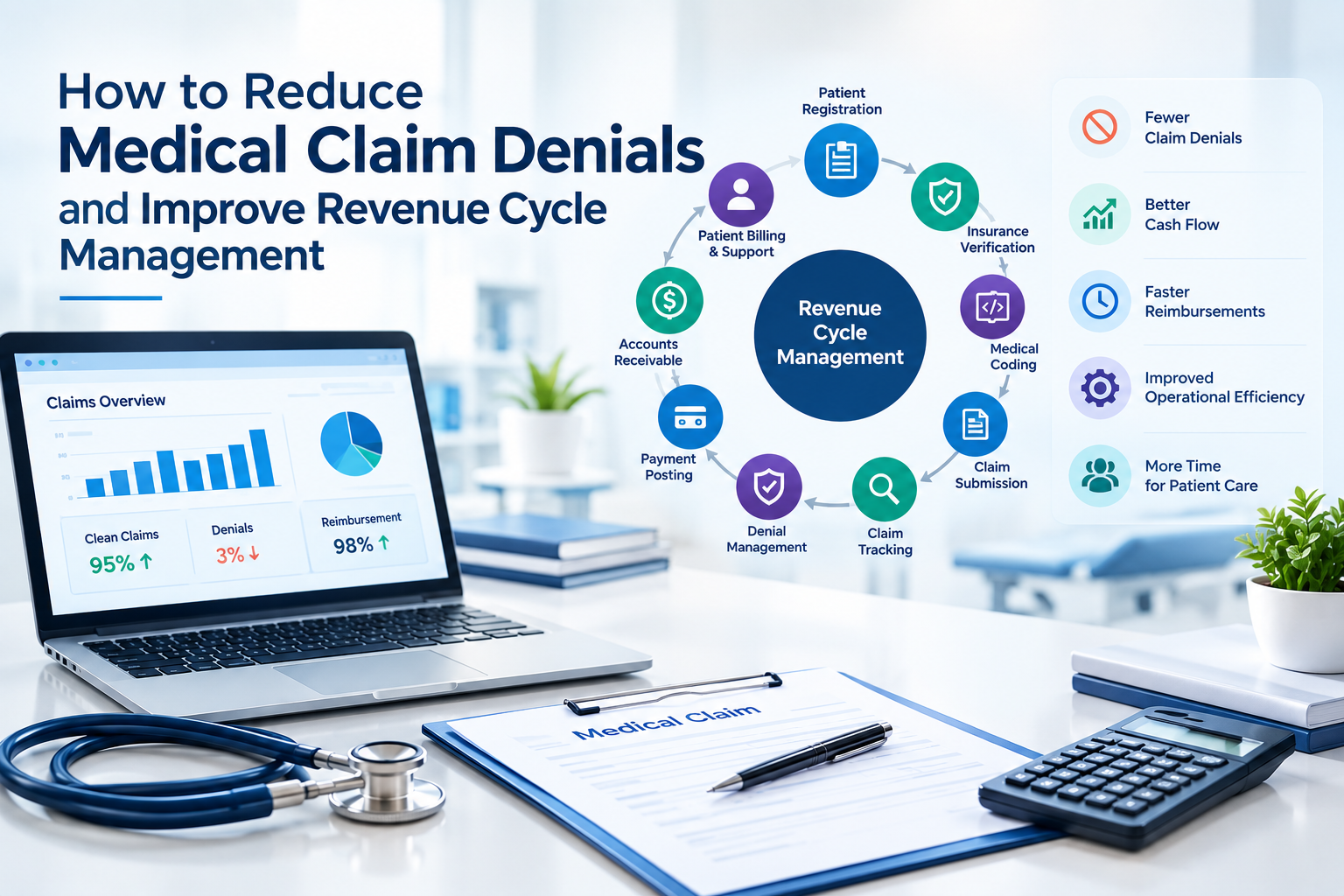
A strong Revenue Cycle Management (RCM) strategy can help healthcare organizations identify billing issues, improve claim accuracy, and maintain a healthier cash flow.
What Causes Medical Claim Denials?
Medical claims can be denied for many different reasons. Some of the most common include:
Incorrect patient information
Insurance eligibility issues
Coding errors
Missing documentation
Duplicate claims
Incorrect billing information
Authorization problems
Claims submitted after payer deadlines
Identifying these issues early can help healthcare practices reduce avoidable denials and improve the overall billing process.
The Importance of Accurate Medical Billing
Accurate medical billing is one of the most important parts of a successful revenue cycle. Even a small error in a claim can result in rejection or delayed reimbursement.
Professional medical billing services can help practices maintain accurate patient information, review claims before submission, and identify potential billing problems.
Better accuracy can contribute to:
Fewer claim rejections
Faster reimbursements
Improved cash flow
Less administrative workload
Better revenue management
How Denial Management Improves RCM
Denial management is more than simply resubmitting rejected claims. An effective process identifies why claims are being denied and looks for patterns that can be addressed.
A structured denial management process typically includes:
Reviewing the denial reason
Identifying the source of the problem
Correcting the claim or documentation
Resubmitting the claim when appropriate
Tracking the outcome
Monitoring recurring denial trends
This approach can help healthcare practices move from reactive billing to proactive revenue cycle management.
Verify Insurance Before Providing Services
Insurance verification can play an important role in reducing claim problems. Confirming patient eligibility and coverage before an appointment can help identify potential issues before services are provided.
Important information may include:
Patient eligibility
Coverage status
Copay and deductible information
Authorization requirements
Insurance plan details
Early verification can reduce surprises and support a smoother billing process.
Improve Medical Coding Accuracy
Medical coding directly affects claim processing and reimbursement. Incorrect codes, missing modifiers, or inconsistencies between documentation and coding can contribute to claim denials.
Healthcare practices should maintain consistent coding procedures and ensure that claims accurately reflect the services provided.
Working with experienced medical billing and coding professionals can help practices improve claim quality and reduce preventable errors.
Track Accounts Receivable Regularly
Reducing claim denials is only one part of effective RCM. Healthcare providers also need to monitor unpaid claims and outstanding accounts receivable.
Regular A/R follow-up helps identify:
Aging claims
Delayed payments
Unresolved denials
Insurance-related issues
Outstanding balances
A consistent A/R management process can help practices maintain healthier cash flow and prevent unpaid accounts from becoming increasingly difficult to recover.
Use RCM Reporting to Identify Problems
Data and reporting can provide valuable insight into the financial performance of a healthcare practice.
Key metrics may include:
Claim denial rate
Clean claim rate
Days in accounts receivable
Collection rate
Outstanding A/R
Payment turnaround time
Monitoring these metrics allows practices to identify weaknesses and make informed decisions about their revenue cycle.
Benefits of Professional RCM Services
Managing billing, coding, claims, denials, and A/R internally can require significant time and resources. Professional RCM services can help healthcare practices streamline these processes while reducing the administrative burden on internal teams.
A well-managed RCM process can support:
Better Revenue: Reduce preventable billing issues and improve collections.
Fewer Denials: Identify common problems and improve claim accuracy.
Faster Payments: Keep claims moving through the reimbursement process.
Greater Efficiency: Reduce repetitive administrative tasks.
Better Focus: Allow healthcare teams to spend more time on patient care.
Final Thoughts
Medical claim denials can have a direct impact on the financial performance of a healthcare practice. By improving insurance verification, billing accuracy, medical coding, denial management, and A/R follow-up, providers can build a more efficient revenue cycle.
Investing in effective medical billing and Revenue Cycle Management services can help healthcare organizations reduce unnecessary delays, improve financial visibility, and create a more streamlined billing operation.
.


