Healthcare providers face many challenges when managing insurance claims, and prior authorization is one of the most important processes that can affect reimbursement.
When certain medical services, procedures, medications, or treatments require approval from an insurance payer, healthcare providers may need to obtain authorization before providing the service.
If authorization requirements are missed or incorrect information is submitted, a claim may be delayed or denied.
For this reason, effective prior authorization management is an important part of a successful medical billing and revenue cycle management strategy.
What Is Prior Authorization?
Prior authorization is a process used by insurance companies to determine whether a specific healthcare service or treatment meets their coverage requirements before the service is provided.
Depending on the payer and plan, authorization may be required for certain:
- Diagnostic procedures
- Surgical procedures
- Imaging services
- Specialized treatments
- Medical equipment
- Prescription medications
- Other healthcare services
Authorization requirements can vary by payer, insurance plan, patient, and type of service.
Why Is Prior Authorization Important in Medical Billing?
Prior authorization can have a direct impact on the claims process.
When the required authorization is obtained correctly, the provider has stronger support for submitting the claim after the service is performed.
However, if authorization is missing, expired, incorrect, or does not match the service provided, the claim may face reimbursement problems.
This makes authorization verification an important step before certain services are delivered.
5 Ways Prior Authorization Can Affect Revenue Cycle Management
It Can Prevent Avoidable Claim Problems
One of the biggest advantages of proper authorization management is the opportunity to identify potential insurance issues before a service is provided.
Checking authorization requirements in advance can help healthcare staff address problems earlier rather than discovering them after claim submission.
It Can Reduce Payment Delays
Incomplete or incorrect authorization information may lead to additional payer review.
These issues can delay reimbursement and increase the amount of time a claim remains outstanding.
A well-organized authorization workflow can help reduce unnecessary delays.
It Supports Better Patient Communication
Patients may not always understand their insurance requirements.
When providers identify authorization requirements before treatment, staff can communicate relevant information to patients and help set appropriate expectations regarding coverage and billing.
It Can Affect Accounts Receivable
Unresolved authorization-related issues can contribute to outstanding accounts receivable.
When claims remain unpaid, billing teams may need to investigate the issue, communicate with the payer, and determine whether additional documentation or corrective action is required.
lling.
It Helps Create a More Efficient Billing Workflow
Prior authorization should not be viewed as a separate task disconnected from medical billing.
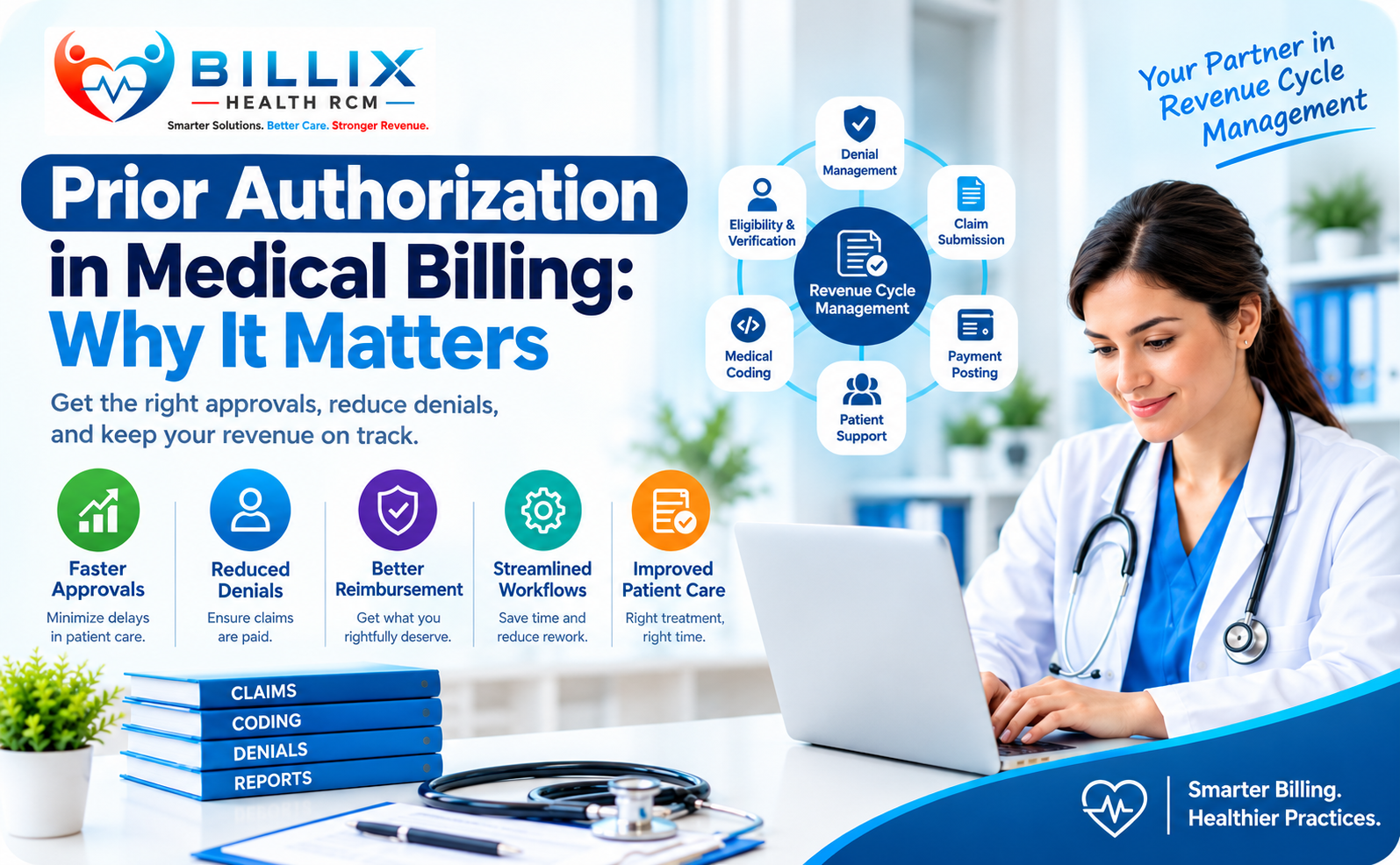
It is part of the larger revenue cycle and can influence eligibility, claim submission, reimbursement, denial management, and accounts receivable.
Integrating authorization processes into the overall RCM workflow can create better coordination between front-office and billing teams.
Common Prior Authorization Challenges
Healthcare organizations may encounter several authorization-related challenges, including:
- Not identifying an authorization requirement
- Incorrect authorization information
- Expired authorization
- Authorization for the wrong service
- Missing documentation
- Communication gaps between departments
- Delays in obtaining payer approval
- Difficulty tracking authorization status
These problems can create additional administrative work and potentially affect reimbursement.
Final Thoughts
Prior authorization is more than an administrative requirement. It can influence the entire healthcare revenue cycle, from scheduling and service delivery to claim submission and reimbursement.
By verifying requirements early, maintaining accurate information, tracking authorization status, and monitoring authorization-related denials, healthcare providers can build a more efficient billing workflow.
For practices looking to strengthen their revenue cycle, working with an experienced medical billing and RCM company can provide additional expertise and operational support.


