
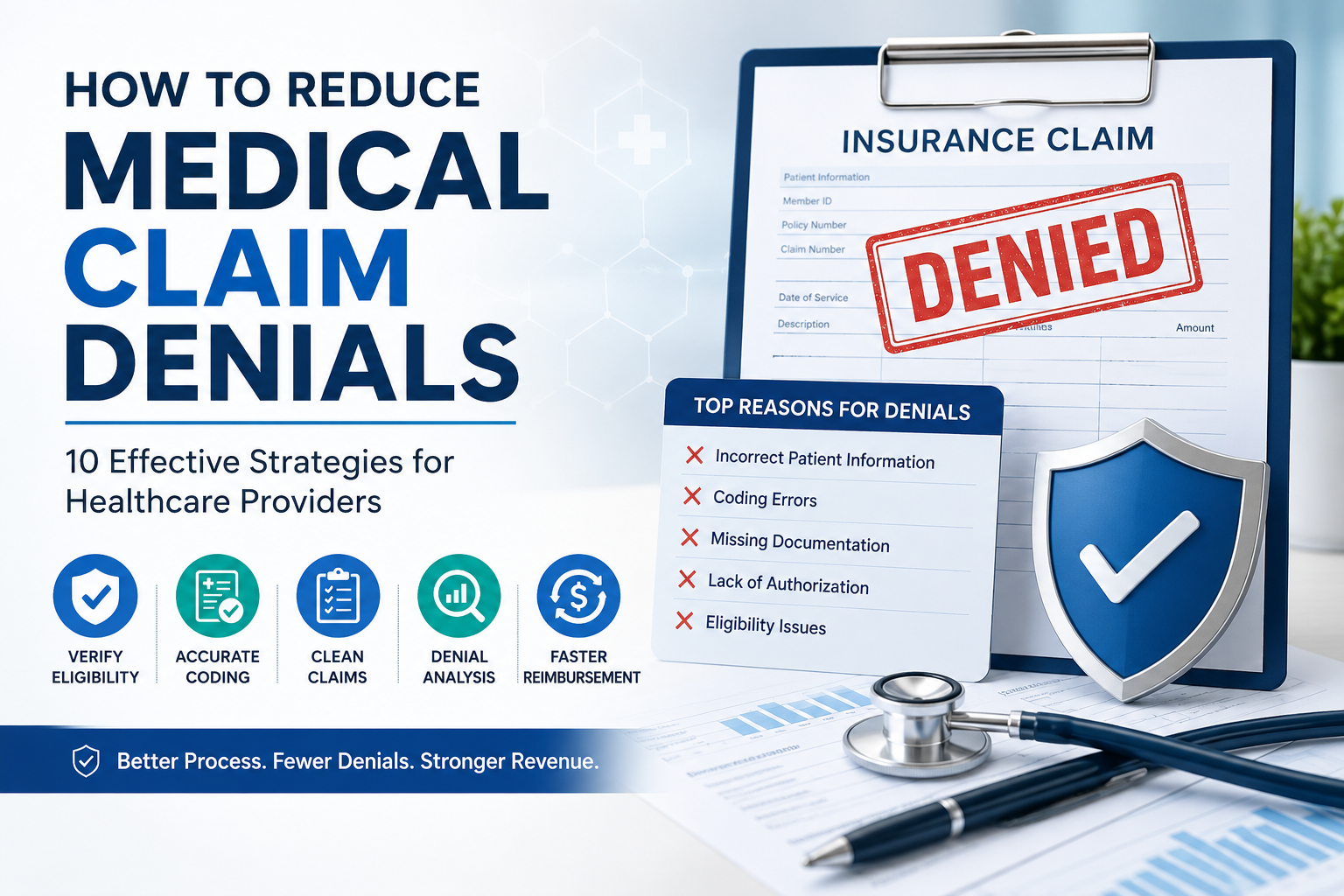
Medical claim denials are one of the biggest challenges healthcare providers face when managing their revenue cycle. A denied claim can delay reimbursement, increase administrative workload, and negatively affect a practice’s cash flow. For this reason, healthcare organizations need an effective medical billing and denial management strategy to identify errors before claims are submitted.
A strong revenue cycle management (RCM) process helps healthcare providers improve claim accuracy, reduce avoidable denials, and collect payments more efficiently. Revenue cycle management covers multiple stages of the healthcare financial process, from patient registration and insurance verification to claims processing and final payment collection.
What Is a Medical Claim Denial?
A medical claim denial occurs when an insurance payer refuses to reimburse a healthcare provider for a submitted claim. Denials can happen because of incorrect patient information, coding mistakes, eligibility issues, missing documentation, authorization problems, or payer-specific requirements.
While some denials are unavoidable, many can be prevented with proper processes and timely claim review.
10 Ways to Reduce Medical Claim Denials
Verify Patient Insurance Eligibility
Insurance verification should happen before the patient receives services whenever possible. Confirming eligibility, coverage details, benefits, and authorization requirements can help prevent avoidable claim rejections and denials.
Accurate insurance information at the beginning of the revenue cycle creates a stronger foundation for successful claim submission.
Improve Medical Coding Accuracy
Incorrect medical coding is a common source of claim problems. Healthcare providers should ensure that diagnosis and procedure codes accurately reflect the services documented in the patient’s medical record.
Regular coding audits and certified medical coding professionals can help identify errors before claims reach the payer.
Submit Clean Claims
A clean claim contains accurate and complete information and meets the payer’s submission requirements.
Before submission, billing teams should review:
- Patient demographics
- Insurance information
- Provider details
- Diagnosis codes
- Procedure codes
- Modifiers
- Authorization information
- Required documentation
A strong claim-scrubbing process can identify many errors before submission.
Track Prior Authorization Requirements
Certain procedures and services require prior authorization from insurance companies. Missing or incorrect authorization information can result in denied claims.
Healthcare organizations should establish a process for identifying authorization requirements and tracking approvals before services are performed.
Monitor Claim Submission Timelines
Insurance companies have specific filing deadlines. Claims submitted after the timely filing period may be denied even when the medical service was valid.
An efficient medical billing process should include claim submission monitoring and timely follow-up to minimize missed deadlines.
Analyze Your Denial Reasons
Denial management should go beyond simply resubmitting rejected claims.
Healthcare providers should categorize denials and identify recurring patterns. For example, if a practice repeatedly receives eligibility-related denials, the underlying insurance verification process may need improvement.
Tracking denial trends allows RCM teams to focus on the root cause rather than repeatedly fixing the same problem.
Strengthen Accounts Receivable Follow-Up
Unresolved claims can remain in accounts receivable for extended periods, delaying revenue collection.
Regular AR follow-up helps healthcare providers identify unpaid claims, investigate payer issues, submit corrected claims, and pursue appropriate appeals.
Effective AR management is an important part of maintaining healthy cash flow.
Stay Updated on Payer Requirements
Insurance payer policies and billing requirements can change. A billing process that worked previously may create problems if payer rules are updated.
Healthcare billing teams should regularly review payer guidelines and communicate important changes to coding and billing staff.
Use RCM Analytics and Reporting
Data can help healthcare organizations understand where revenue is being lost.
Important metrics to monitor include:
- Claim denial rate
- Clean claim rate
- Days in accounts receivable
- Average reimbursement time
- Top denial reasons
- Outstanding AR
- First-pass claim rate
Using RCM analytics allows practice managers to make informed decisions and identify opportunities to improve financial performance.
Consider Professional Medical Billing Support
Managing the entire revenue cycle internally can be challenging, particularly for growing healthcare practices. Outsourcing selected RCM functions or partnering with an experienced medical billing company can provide additional expertise in coding, claims processing, denial management, AR follow-up, and reporting.
The right RCM partner can help healthcare providers streamline administrative processes while allowing their internal teams to focus more on patient care.
Why Denial Management Matters for Healthcare Practices
Medical claim denials are more than a billing department problem. They can affect cash flow, staff productivity, and the overall financial performance of a healthcare organization.
Effective denial management focuses on prevention, identification, correction, and analysis. Instead of treating every denial as an individual issue, healthcare providers should look for patterns and fix the processes creating recurring denials.
Final Thoughts
Reducing medical claim denials requires attention to every stage of the revenue cycle. From insurance verification and accurate medical coding to clean claim submission, AR follow-up, and denial analysis, each step contributes to successful reimbursement.
Healthcare providers that invest in an efficient revenue cycle management strategy can reduce avoidable billing problems, improve collections, and create a more efficient financial workflow.
At Billix Health RCM, effective medical billing is about more than submitting claims. A complete RCM approach helps healthcare providers manage billing, coding, claims, denials, and follow-up throughout the revenue cycle.
Frequently Asked Questions
What is the most common cause of medical claim denials?
Common causes include eligibility issues, incorrect patient information, coding errors, missing documentation, authorization problems, and timely filing issues.
How can healthcare providers prevent claim denials?
Providers can reduce denials by verifying insurance eligibility, improving coding accuracy, submitting clean claims, tracking authorizations, monitoring payer requirements, and analyzing denial trends.
What is denial management in medical billing?
Denial management is the process of identifying, correcting, appealing, and preventing denied healthcare claims. Effective denial management also focuses on finding the root causes of recurring denials.
How does RCM help reduce claim denials?
Revenue cycle management connects multiple financial and administrative processes, including eligibility verification, coding, billing, claims processing, denial management, AR follow-up, and payment collection. Managing these processes together can improve billing accuracy and revenue performance.


