In today’s rapidly evolving healthcare industry, financial stability is just as important as delivering exceptional patient care. Healthcare providers face increasing administrative burdens, changing payer requirements, and stricter compliance regulations. These challenges have made Revenue Cycle Management (RCM) more critical than ever. As technology continues to evolve, medical billing is becoming faster, smarter, and more accurate.
Modern healthcare organizations are no longer relying solely on manual billing processes. Instead, they are adopting advanced technologies that improve efficiency, reduce claim denials, and maximize revenue. Understanding how technology is reshaping medical billing can help healthcare providers stay competitive while delivering better financial outcomes.
What Is Revenue Cycle Management?
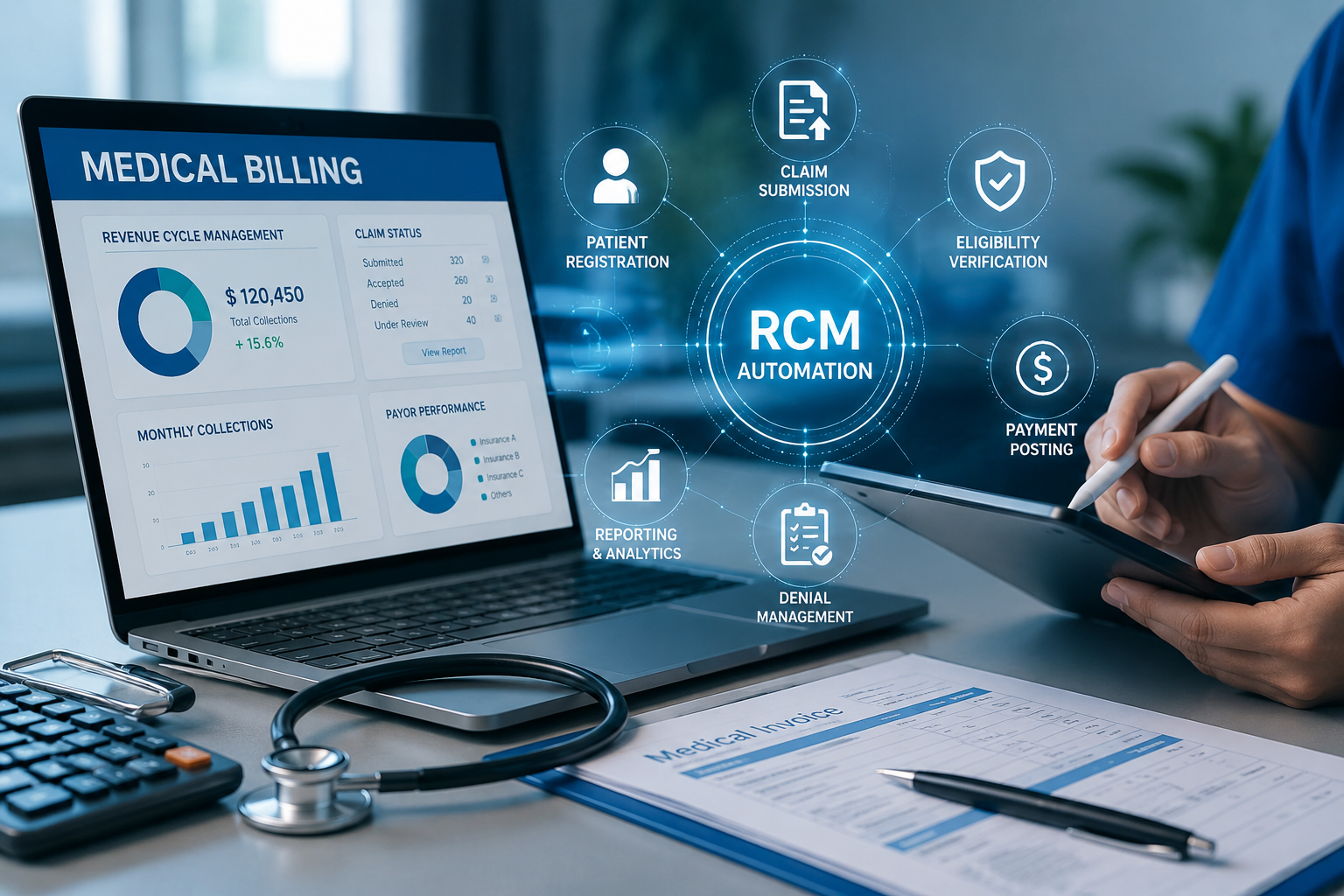
Revenue Cycle Management is the complete financial process that begins when a patient schedules an appointment and ends when the provider receives full payment for services rendered. It includes patient registration, insurance verification, medical coding, claim submission, payment posting, denial management, accounts receivable follow-up, and reporting.
An effective RCM process ensures that healthcare providers receive timely reimbursements while maintaining compliance with industry regulations. Technology is making every stage of this process more efficient and accurate.
The Role of Technology in Medical Billing
Technology has transformed nearly every aspect of medical billing. Advanced billing software, automation tools, and intelligent analytics help eliminate repetitive tasks and reduce human error.
Healthcare providers now benefit from:
- Automated claim generation
- Real-time insurance eligibility verification
- Electronic claim submission
- Digital payment posting
- Smart denial tracking
- Performance dashboards and financial reporting
These innovations allow billing teams to spend less time on administrative work and more time resolving complex reimbursement issues.
Automation Reduces Billing Errors
Manual data entry often leads to coding mistakes, missing documentation, and claim rejections. Automation minimizes these risks by validating information before claims are submitted.
Automated billing systems can identify incomplete patient records, incorrect coding, and payer-specific errors before submission. This significantly increases clean claim rates and reduces costly rework.
As a result, healthcare practices experience faster reimbursements and improved cash flow.
Artificial Intelligence Improves Claim Accuracy
Artificial Intelligence (AI) is becoming an important part of modern Revenue Cycle Management. AI-powered systems can analyze thousands of claims, identify billing patterns, and predict which claims are likely to be denied.
Instead of waiting for insurance companies to reject claims, providers can correct issues before submission.
AI also helps billing specialists prioritize denied claims based on financial impact, improving recovery rates while reducing administrative workload.
Real Time Eligibility Verification
One of the leading causes of claim denials is incorrect or outdated insurance information. Modern eligibility verification tools instantly confirm patient coverage before appointments.
This allows providers to:
- Verify active insurance
- Confirm patient benefits
- Check deductibles and copayments
- Identify authorization requirements
Accurate eligibility verification prevents billing delays and improves the patient experience.
Better Denial Management
Claim denials remain one of the biggest financial challenges for healthcare organizations. Technology enables billing teams to track denial trends, identify root causes, and implement corrective actions.
Advanced reporting tools highlight recurring issues such as coding errors, missing documentation, or authorization problems. By addressing these issues proactively, practices can significantly reduce denial rates and recover lost revenue.
Enhanced Compliance and Data Security
Healthcare organizations must comply with HIPAA regulations while protecting sensitive patient information.
Modern billing platforms include:
- Secure cloud storage
- Encrypted patient data
- User access controls
- Audit trails
- Automatic compliance updates
These security features help protect patient information while ensuring regulatory compliance.
Data Analytics for Smarter Decisions
Technology provides detailed financial insights that help healthcare providers improve business performance.
Analytics dashboards monitor key performance indicators such as:
- Clean claim rate
- Days in Accounts Receivable
- Collection ratio
- Denial percentage
- Payment turnaround time
These reports allow providers to identify inefficiencies and make informed decisions that increase profitability.
Why Outsource Revenue Cycle Management?
Many healthcare providers choose to outsource medical billing to experienced Revenue Cycle Management companies. Outsourcing offers access to trained billing professionals, advanced technology, and industry expertise without increasing internal staffing costs.
Professional RCM partners manage everything from insurance verification to denial management, allowing physicians and staff to focus on delivering quality patient care.
Companies like Billix Health RCM help practices improve collections, reduce billing errors, and streamline the entire revenue cycle through customized billing solutions
Final Thoughts
Technology is revolutionizing medical billing and Revenue Cycle Management by making billing processes faster, more accurate, and more efficient. Automation, Artificial Intelligence, analytics, and secure digital platforms help healthcare providers reduce claim denials, improve cash flow, and maintain compliance.
As healthcare continues to evolve, adopting advanced billing technology is no longer optional; it’s essential for long-term financial success. Practices that invest in modern Revenue Cycle Management solutions will be better positioned to maximize reimbursements, enhance operational efficiency, and provide exceptional patient care.
Frequently Asked Questions
What is Revenue Cycle Management (RCM)?
Revenue Cycle Management is the complete financial process that manages patient billing, insurance claims, payment collection, denial management, and reimbursement from patient registration to final payment.
How does technology improve medical billing?
Technology automates repetitive tasks, reduces billing errors, improves claim accuracy, speeds up reimbursements, enhances compliance, and provides real-time financial reporting.
Why should healthcare providers outsource medical billing?
Outsourcing gives providers access to experienced billing specialists, advanced technology, lower operational costs, improved claim acceptance rates, and faster revenue collection while allowing staff to focus on patient care.


